Kinga V. Szabó
Wolf-eyed witch, writer, world-weaver
I’m a Hungarian writer, visual artist and editor lingering in the quiet spaces where gothic fantasy brushes against folklore
and romance touches the supernatural.I write character-driven stories about grief, love, identity, devotion and transformation—extraordinary lives shaped by deeply ordinary human needs.
Currently writing
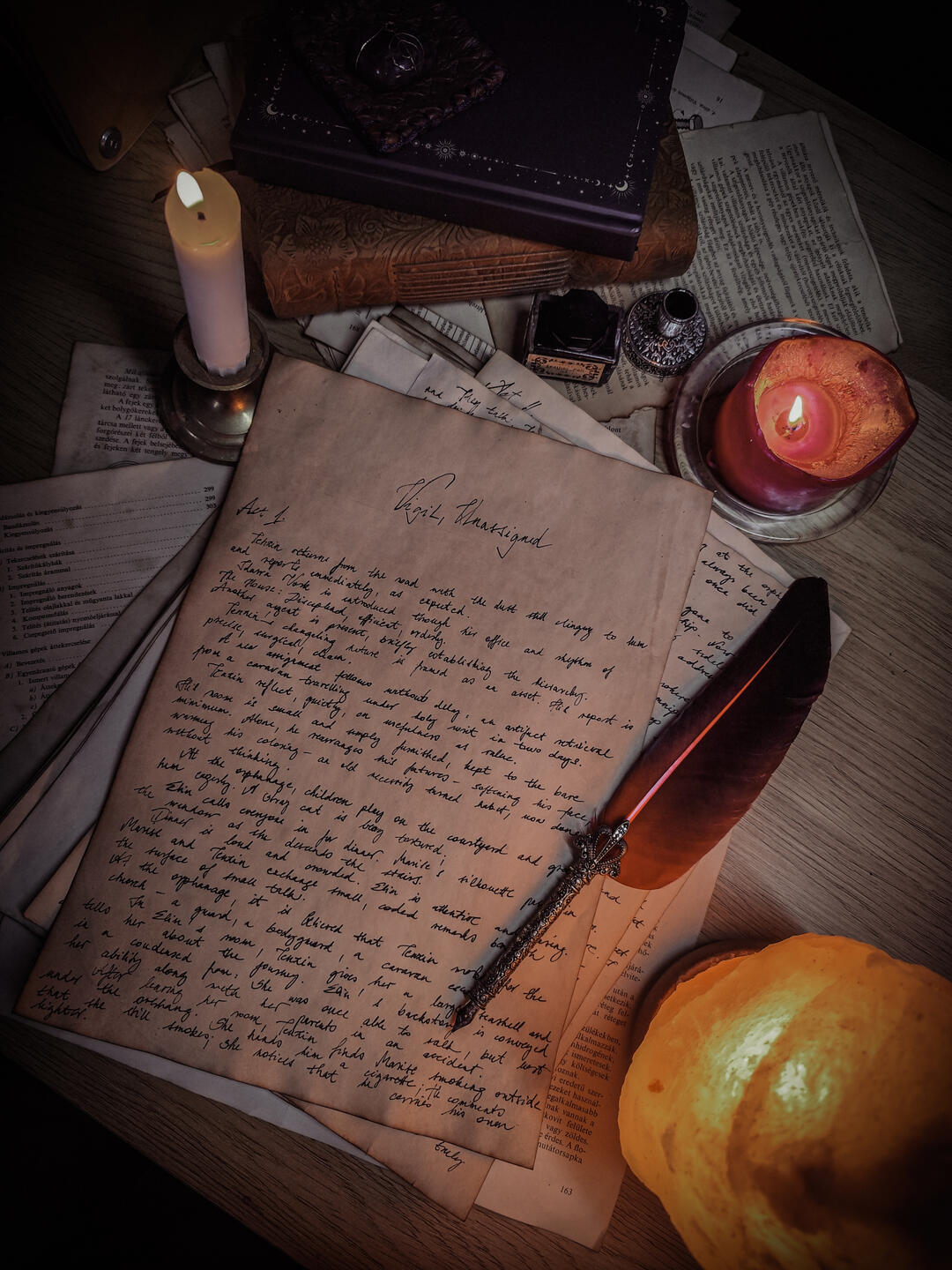
Vigil, Unassigned
A psychological queer gothic fantasy about relational love across time.
Tenzin was raised to disappear.A changeling operative shaped by secrecy and obedience, he has spent his life becoming whatever other people need him to be.Then, in a hospice ward, he meets Aren—a dying man with whom he discovers the unfamiliar freedom of being wanted without first making himself useful. What grows between them is brief by the measure of a lifetime, but it unsettles the oldest certainty Tenzin has about belonging: that a place beside another person must be earned.Vigil, Unassigned is a psychological queer gothic fantasy about relational love across time: the people we lose, the people who remain, and the ways love changes as bodies age, identities shift, and usefulness falls away. It is a story of grief, becoming and personhood—and of the strange forms devotion takes across a lifetime.
short fiction
Reyn - D&D Vignettes
Stories born from questionable decisions at the gaming table.
Other worlds In development
The Pale Wolf
Xaviel Nevarrion was raised by the Inquisition to be its perfect weapon — obedient, precise, efficient.
But when a buried truth rises from the ashes of his mother’s death, the cracks in his devotion begin to widen.A single act of mercy shatters the life he was trained for: a witch spared, a mission abandoned, a future undone. Now hunted by the order that made him and haunted by a legacy he never asked for, Xaviel is forced to confront a truth that may destroy him — or remake him entirely.The Pale Wolf is a dark, character-driven fantasy about grief, faith, mercy, and becoming — the story of a man forged in fire, and the dangerous freedom of choosing who you are in a world built to crush you.
STORIES THAT LINGER
Essays, stories, updates, and occasional notes from behind the work.
Ash & Charmwright
Independent publishing & editorial studio
A small independent studio devoted to thoughtful stories, beautiful books, and the work of bringing them into the world.Founded by Kinga V. Szabó in 2026, Ash & Charmwright brings together publishing, editorial work and book design, with a particular affection for the strange, folkloric, gothic and quietly unconventional.First publishing project coming Autumn 2026.
About
I’m Kinga V. Szabó, a Hungarian writer, visual artist, editor, and solitary hedge witch living among the woods of south-western Hungary.I’ve been making up stories for as long as I can remember. One of them was published when I was six, which remains a difficult career milestone to follow.Storytelling has changed shape many times since then—fiction, photography, illustration, tabletop worlds, objects made by hand—but I have never really stopped building worlds.The stories I write now tend to live in the quiet spaces between genres, where dark fantasy brushes against folklore, romance touches the supernatural, and magic is often less important than what people do in its presence. I’m drawn to burdened, complicated characters and the relationships that change them—not necessarily through grand victories, but through grief, devotion, failure, mercy, desire, and the difficult choice to remain.I write about deeply ordinary human needs in worlds touched by the strange: the need to belong, to be loved without earning it, to make meaning from grief, and to choose who we become when the lives imagined for us begin to fall apart.I’m less interested in defeating darkness than in what it means to live with it.Stories are only one way I make things.Writing has never existed separately from the rest of my creative life. I photograph, draw, sculpt, sew, build costumes, and occasionally decide that some object which could quite reasonably be purchased should instead consume several days of my life because I could make it myself.The same things find their way into all of it: folklore and old stories, witchcraft and ritual, abandoned places, candlelight, worn books, strange little objects, and the natural world in all its beautiful and occasionally unsettling forms.Much of my inspiration comes from paying attention. Mushrooms pushing through leaf litter. Frogs calling from the wetlands after dark. Bones, feathers, moths, old trees, fog settling over fields. The places where the ordinary world becomes strange simply because you looked at it for long enough.For me, worldbuilding often begins there.Away from the page, I share a deliberately slow and somewhat overgrown life with my husband and an unreasonable number of cats.I’m happiest somewhere between a candlelit desk and a muddy path, usually with coffee nearby and some creative project occupying considerably more of the house than originally intended. I believe in making things slowly, caring about them perhaps an unreasonable amount, and allowing curiosity to lead me down paths that may or may not have anything to do with what I was supposed to be doing.In 2026, one of those paths led to Ash & Charmwright, my independent publishing and editorial studio: another way of bringing together the things I love about storytelling, editing, visual design, and making books into objects worth keeping.I’m currently writing Vigil, Unassigned, a psychological queer gothic fantasy about relational love across time, while slowly building the larger body of strange, intimate, folkloric work that surrounds it.I write stories that linger.Stories interested less in conquering the darkness than in who we become living through it.

The Penitent
A Gothic Short Story
Rain slanted through the alley behind the Bell & Crown, ripping silver gashes through the lamplight. Above, the bells of Saint Edevin tolled—slow, hollow, as if blessing or warning could sound the same.Lucien stopped beneath a warped eave, cloak dripping, the scent of smoke and wine clinging to him. Laughter swelled and broke like surf in the doorway as she stepped out behind him—candle-bright in the downpour, shawl half-slipped, hair catching the thin spill of tavern light.“Not leaving yet, are you?” She smiled the way people smile when they expect to be followed.He had followed.They lingered beneath the overhang. Lucien set his shoulders against the wall. She giggled—low, teasing—and wiped a droplet from his cheek.“God, you’re cold,” she murmured. “Come back inside. There’s mulled wine if the priest hasn’t drained it.”“I prefer the rain.”She bit her lip. “You sound like a penitent.”“Perhaps I am.”“We all are, in one way or another.”Her laughter softened, but beneath it another rhythm rose: her pulse drumming quick in her throat.Lucien swallowed. He could not look away.“Tell me something,” she said, stepping closer until her chest brushed his. “You always sit alone. Do you wait for someone, or are you simply fond of sorrow?”“Fond of it?” He let out an amused huff. “No. But it’s loyal company.”She laughed again, breath warm against his jaw. A little closer and he would not have to choose.He should have turned away, walked into the storm and let it drown the ache. Instead, he traced the line of her waist—lightly, as if gentleness could absolve intent—half-entranced by her and half-sick with hunger.“There are hungers,” he said, voice hoarse, “that prayer cannot quiet. You cage them, starve them, call it virtue—but they wait, gnawing away at your restraint.”Her lips parted as she studied him. She had noticed him before; he knew it—the window table, the untouched bread, the way he never bought a dance, never left with anyone. Tonight she had threaded herself through his arm, and he had not shaken her off.“You speak like a confessor,” she said. “Or a poet.”“I’m neither.”“What, then?”“A man who once believed himself virtuous.” He smiled without mirth. “But virtue is just hunger in a better coat.”Rain drummed harder on the awning. She rose on her toes and let her mouth ghost his.“I don’t know about virtue,” she whispered. “But you could yield for a night—if you wished.”He wanted to believe her. God, he did. Let it be simple: a kiss, a room, a door to shut out the bells.Instead, when he closed his eyes, the hollow years broke in—the cellars, the rats, the trembling hands washed clean in stolen blood, the stains left stuck under his nails. Penance had been his trade; survival had made a mockery of it.“Elira,” he said, her name breaking like prayer.She looked up. “Mhm?”His hand found her jaw, his thumb pressed to her lower lip.“Forgive me.”“For what?”He could have told her—for what I am, for what I must take—but the words withered in his mouth.Her eyes widened as if she mistook his guilt for reverence.Lucien bent his head.The world narrowed to the warmth of her throat, the salt of wet skin, perfume and clove, the flutter of her pulse. For one breath, the hunger felt holy—absolution written in flesh.The bells faded. The rain blurred to a hush.Her heartbeat weakened to a faint tremor against his mouth. His lips softened against her skin; when he drew back, a thin crimson thread curved from the hollow of her neck to the corner of his lip.He wiped it away, ashamed by the faint tremor in his hand.Her breath came shallow. She whispered something—perhaps his name, perhaps a prayer.She lived, and he told himself that mattered.He eased her onto the steps.“Sleep,” he murmured, and knelt beside her, letting the rain scour the red from his hands.He felt the true hunger stir—not for blood, but for the punishment that should have come and never did.The street was empty when he rose. The only light left was the pale glow of the cathedral spire.“Forgive me,” he whispered.Once, he would have crossed himself.Now he thought of her fading warmth and named it survival, though it felt more like surrender—the amen at the end of a prayer no god would claim.
A Fluency in ruin
A D&D Vignette
The courtyard drowned in noise.Steel rang sharp and frantic through the mist-choked canal, and beneath it something screamed—a high-pitched, wet sound swallowed almost immediately by the frenzy of bodies colliding in blood-soaked mud. Torchlight shivered against the crumbling walls of Gatto’s hidden mansion, turning the drifting fog amber and sickly gold. Shadows lunged and folded back into one another. Velvet flashed. Teeth glimmered white through smeared crimson.The ghoul crashed through the melee on all fours.It hit one of Colette’s men hard enough to snap his knee sideways before dragging him shrieking into the flooded stones. The rot-black fingers clawed at his face while the ghoul’s jaws worked frantically at the exposed hollow beneath his throat. Blood spread outward in warm ribbons through the canal water.Nobody stopped to help him.Reyn slipped sideways beneath a curved blade aimed for his neck. The motion felt almost instinctive now, less a conscious reaction than something threaded permanently into his muscles after years spent surviving his own body. Blood spilled from the cut across his palm before the pain fully registered. It twisted through the air in a dark, glistening strand and hardened instantly into the lash.The crack split through the courtyard like lightning.A man collapsed, choking as the blood-lash coiled around his throat. Reyn pulled once. Cartilage gave way under the pressure with a sound like wet branches snapping beneath heavy boots.The body disappeared into the mud.The smell of the courtyard thickened with every passing second.Canal rot.Wet stone.Blood steaming in the cold night air.Burned oil.Opened bodies.It settled heavily against the tongue.Above the chaos, Sára’s violin rose suddenly through the fog.The sound cut strangely clean through the carnage—sharp enough to make Reyn’s spine tighten beneath his coat. She stood near the broken stairs leading toward the mansion entrance, blindfold dark against the pale gold of her skin, bow gliding fiercely across the strings while battle raged blindly around her.Three of Colette’s men staggered at once, clutching at their heads.Harle descended on them immediately.The Doge of Blood moved through violence with terrible joy. His crimson-lined coat hung open in ribbons now, drenched black-red beneath the torchlight, porcelain bauta gleaming pale and expressionless above the slaughter. Every movement carried the eager precision of a man who had long ago mistaken bloodshed for transcendence.He laughed as he fought.Not wildly.Not cruelly.Simply with the breathless reverence of someone standing before a beloved altar.Reyn watched him carve through another soldier and thought, not for the first time, that Harle would have gladly died in any battle grand enough to remember him.Somewhere deeper in the fog, Gatto shrieked Colette’s name.The two Doges collided again—a blur of silk, claws, jeweled rings, and flashing steel half-swallowed by the mist. They fought less like nobles and more like starving strays dragged together at the bottom of a canal. Reyn caught glimpses only in fragments: Gatto tearing handfuls of silver hair free from Colette’s scalp, Colette driving a knife toward Gatto’s ribs with animal desperation, both of them slipping in blood and mud while screaming obscenities through split lips.The courtyard no longer resembled a battlefield.It felt claustrophobic now. Feverish. Like the inside of a dying beast’s dream.And beneath it all, Reyn kept thinking.Harle was overextended.The Red Ores had not arrived.Gatto was rabid.Colette—cornered.The patterns arranged themselves naturally in his mind, one atop another with quiet clinical certainty.Then: the slightest shift of movement—the subtle turn of Colette’s shoulders toward the canal passage hidden behind the drifting fog.Reyn moved before thought entirely caught up.The world folded sharply around him, mist swallowing him whole for one impossible heartbeat.He emerged directly behind her.Colette barely managed half a scream before the blood-lash struck around her waist and jerked her backward hard enough to throw her into the flooded stones. The impact drove the breath from her lungs.Reyn planted one boot against her spine and tightened the lash.Blood shimmered darkly around her body where the magic constricted, pulsing faintly in time with his heartbeat. Colette writhed beneath him, silk ruined with mud, silver hair plastered wetly against her crimson-splattered bauta.Gatto stepped through the mist.For a moment, the courtyard seemed to narrow around the three of them.Colette restrained in the mud.Reyn standing over her.Gatto approaching slowly through smoke and torchlight.One of her earrings was missing. Blood streaked the side of her throat in branching lines where Colette’s nails had opened the skin. Her silks hung torn from one shoulder, exposing bruised flesh beneath lace and pearls.Beautiful, Reyn thought distantly. In the same way storms were beautiful just before they swallowed ships whole.Colette laughed weakly beneath the lash.“Look at you,” she spat through bloodied teeth. “Still pretending anyone could ever love you enough to follow.”Gatto grinned. The expression unfolded gradually across her face like something poisonous blooming underwater.“Oh,” she whispered. “I think I shall enjoy killing you.”“No.”Harle’s voice cut cleanly through the courtyard.Reyn turned.The Doge of Blood remained standing only through stubbornness now. One arm hung uselessly at his side while blood streamed steadily down the front of his coat in dark, thick sheets. The pale porcelain of his bauta had cracked near the jawline sometime during the fight.Behind him, the Red Ores finally flooded through the broken canal gate.Too late.Harle pointed his blade toward Gatto with visible effort.“You cannot execute another Doge in cold blood,” he rasped. “Be sensible, woman.”The outrage that crossed Gatto’s face arrived instantly and without restraint.Reyn saw the emotion settle inside her—not merely anger, but wounded vanity. The offense of being corrected publicly. Restrained publicly. Denied publicly.Gatto inhaled sharply, clearly preparing to unleash something vicious in return—a jagged, messy eruption of pure spite that Reyn knew would only lead to a frantic, unpredictable struggle.He knew better than to try to reason with the woman. He simply blinked, leaned into the frequency of her rumination, and dropped the words into her mind like a stone into a stagnant pool.He is one slap away from death.The whisper slipped into her mind, cold and precise like a knife’s edge through silk. Gatto froze, eyes snapping toward Reyn. No one else noticed, but Reyn watched the exact moment the suggestion took root, bypassing her vanity to settle firmly into the cold, geometric architecture of her ambition.The transformation happened with almost frightening speed. Her outrage vanished. The wounded pride faded. What remained looked cleaner, sharper. She looked Harle up and down slowly.“Well,” she purred at last, “you suddenly look far less immortal than usual.”Harle frowned behind the mask.Gatto swayed with the lopsided grace of a feral mouser.Her blade flashed once through the mist.Colette’s head rolled onto the stones before her body did.The courtyard fell silent.Harle barely managed half a step backward before Gatto lunged at him next.Her rapier punched cleanly through his throat. A wet choking sound escaped him—small and confused.The crack spread through Harle’s porcelain bauta in the silence that followed—a thin jagged fracture running from brow to jaw through blood-splattered ivory. For one strange suspended heartbeat the mask held.Then it slipped free.The bauta struck the blood-soaked mud before the rest of him collapsed heavily beside it, blackened gore curling across the stones.Gatto planted one boot against his chest to wrench the blade free from his throat. With absent irritation, she wiped the sole of her boot against his coat before stepping away from the body.Mud.Blood.Canal water.The Red Ores stood frozen around her.Reyn felt Sára gripping his sleeve tightly enough to wrinkle the velvet.“Reyn,” she whispered. Fear trembled beneath the word.He barely heard her.The chaos had not vanished, but the uncertainty had evaporated. A moment ago, Reyn had been a gambler—forced to play a hand in the dark, betting on instinct and adrenaline while the variables shifted beneath his feet.He hated it. He hated the lack of control, the gut-churning necessity of guessing.But as Gatto turned her blade upon Harle, the variables stopped shifting. The fog cleared from her intentions. She was no longer a whirlwind of erratic, static-filled emotion, but a calculable, singular vector of ambition.Reyn had spent a lifetime failing to decode that chaotic human syntax. But this? This was a clean, logical sequence. A simple if-then statement in a language he was actually fluent in.He could count the odds again. Evaluate the leverage. Move from reaction to strategy.He had been forced to bet, but he was finished gambling.Gatto turned slowly toward the gathered Red Ores.The smile spreading across her face happened gradually, widening piece by piece until it transformed her entirely.“Witness,” she declared, voice echoing softly through the mist-veiled canal. “Colette the traitor is dead. Harle, beloved fool that he was, succumbed to his wounds defending this city.” She swept one arm wide in a theatrical flourish, then folded into a deferential bow, clutching mockingly at her own throat.No one contradicted her.No one seemed capable of it.One guard knelt first.Then another.The newly crowned Queen of the Locks looked back toward Reyn through the drifting mist. Her expression wasn’t just a smile; it was a pact. She looked at him like a co-conspirator, or perhaps a pet she hadn’t yet decided to put down.Reyn didn’t return the warmth. Instead, he mapped the path forward.Gatto was a shark, but sharks were predictable. They followed the scent of blood, and they reacted to the pressure of the tide. He knew exactly what she owed him, and he knew exactly how to wrap that debt in the velvet of flattery until they were safely out of the Locks.As he walked toward her, he began to assemble the pieces of the conversation he would need to have—a careful, calculated performance.He had survived the battle; now he would simply have to survive the Queen.
The Ledger And The Blade
A Pale Wolf Prequel
Lahvant’s office was dim when Xaviel stepped inside—the air dense with dust, ink, and the faint metallic tang of extinguished lanterns.A single flame guttered on the edge of the desk, its gold light pooling low, unable to push back the corners. The shadows stayed where they were: languid, reluctant, like torpid creatures that did not wish to be disturbed.Xaviel halted just inside the threshold, hands clasped behind his back, posture straight, boots planted in the strict stance drilled into him since childhood. Rain-darkened strands of white hair clung to his temples, catching what little light there was like threads of frost.Lahvant didn’t acknowledge him at once.He finished scratching a final line across the parchment before him—quill whispering like a blade drawn across leather, ink dull as old blood—then slid it aside with the slow precision of a man who had already reached his conclusion before the conversation even began.Only then did he lift his gaze.“Nevarrion.”“Sir.”A dip of the chin—exact.The boy was young, almost impossibly so—yet already formed by stillness and obedience into something dangerously quiet.Lahvant gestured toward the lone chair.“Sit.”Xaviel moved the way a blade is sheathed—measured, smooth, silent.He sat like someone carved rather than taught—shoulders squared, spine upright, expression blank in a way that wasn’t ignorance but choice. Only the faint flicker of tension along his jaw betrayed any remnant of youth.Lahvant steepled his fingers over the dark wood.“A report has been filed regarding yesterday’s mission.”Xaviel said nothing.Didn’t blink.Didn’t draw breath any deeper than the one before it.“It is conveniently vague,” Lahvant continued, reaching for another parchment and holding it lightly between two fingers. “Yet a member of your squad is dead.”“Yes, sir.”Xaviel acknowledged it with the faintest tilt of his head, but his gaze did not stray to the file. “Inquisitor Merren has already filed his account.”“And have you read it?”Lahvant’s tone sharpened—not in anger or suspicion, but in a demand for truth.“No, sir.”His voice was level.“Inquisitor Merren does not need to discuss his report with me.”Lahvant exhaled through his nose, soft and sharp, almost amused. He tapped the parchment with two fingers and nudged it toward the boy.“Read it.”Xaviel lowered his gaze and obeyed.He scanned the page in a steady, unbroken sweep.The silence stretched, taut but unyielding. There was no shift in his posture.No tightening of the brow. No flicker of surprise in his eyes.Only the lantern’s flame stuttered once—reflected in his pale irises like the final pulse of a dying star.When he was done, he set the parchment back exactly where Lahvant had placed it.Lahvant leaned back slightly, elbows resting on the arms of his chair.“What do you think of it?”“It is not my place,” Xaviel said, voice plain and even, “to think anything of it, sir.”The corner of Lahvant’s mouth tugged—the faintest shadow of a smile, as though acknowledging a well-played move in a game he’d thought he was playing alone.“Good answer. Your integrity is commendable.”He tapped a knuckle once against the desk.The sound was soft—yet somehow cut through the stillness.“However… integrity doesn’t get you promoted.”The lanternlight caught a brief flicker in Xaviel’s eyes—something sharp and keen beneath the neutrality.“Inquisitor Nerisse’s death could have been prevented,” he said. His tone was clean, clinical. “Had the squad’s capabilities been assessed and deployed accordingly.”Lahvant’s gaze sharpened.“Are you suggesting Nerisse should not have been the one sent?”“Yes, sir.”“Who then?”A slight tilt of the head—as though examining a curious artifact.“You, Nevarrion?”The response required no consideration.“I am faster. More agile. More perceptive.”A measured inhale.“And less hesitant.”The stillness that followed was absolute.Yet something in the air shifted—just enough for the shadows to stir along the walls.There was no arrogance in the boy’s voice.No ambition.Just fact.Terrifying in its accuracy.Lahvant regarded him the way one watches the first dark coil of a storm forming over black water.He wasn’t surprised.He wasn’t disapproving.He was weighing the blade set before him.“Did you suggest this to Inquisitor Merren?”“I have, sir.”“And?”Lahvant’s brow lifted.“What did he say?”Xaviel’s gaze dipped—not in deference, but in calculation—as he selected the phrasing that would best conceal the ugliness beneath, the way one finds the angle to drive a knife through armor articulations.“It was far too personal,” he said calmly, “to be considered pertinent to the subject of Inquisitor Nerisse’s death.”Lahvant did not ask for clarification.He didn’t need to.Merren had not dismissed the suggestion.He had dismissed the boy.A faint tightening at the corners of his eyes showed he understood exactly what sort of remark someone like Merren would make to a sixteen-year-old who unnerved men twice his age.He inclined his head once, sharp.“Your report,” he said quietly, “on my table. By midnight.”Xaviel rose at once, the chair barely whispering against the floor.He turned—“Nevarrion.”Xaviel paused to look back over his shoulder.Lahvant held his gaze, long and heavy. Not unkind. Not gentle either. It was the look of a commander-turned-ledger-keeper appraising a weapon forged too perfectly for its sheath—a variable no ledger could account for.“I expect more from you than Merren does.”It was neither praise nor comfort, but a verdict.Xaviel inclined his head—nothing more—and left with the same controlled, lethal composure with which he had entered.A silhouette ghosting past the lantern’s low flame.A whisper of damp boots in the hall.Then quiet.When the door clicked shut, Lahvant exhaled—slow, deliberate.One hand rose to rub the bridge of his nose, easing a pressure that had been building since the moment Xaviel walked in.The boy sees everything, he thought.And no one sees him.Not yet.He leaned back in his chair, gaze fixed on the empty doorway, lanternlight burning low.“Let’s see,” he murmured to the dark, “who you become… before they break you.”
The ballroom of the living dead
A D&D Vignette
The ballroom was an ocean of soft decay and candlelight—a mausoleum dressed for a celebration it never expected to host.Velvet-draped corpses drifted between pillars, silk rustling against brittle bones, masks gleaming like polished ivory. Their bautas—each one etched with fragments of the souls animating them—glowed faintly at the seams, granting them the illusion of warmth, of life, of memory.Reyn stood at the threshold, all black velvet and clenched jaw, taking in the scene with the unease of a man who preferred quiet to spectacle. Beside him, Sára swayed with that uncanny poise she had always possessed, the blindfold tied softly across her eyes. She adjusted her turquoise gown with practiced grace; the color made her look ethereal against the dim, flickering hues.“Stay close,” Reyn murmured.She only smiled and threaded her fingers through his—and then pulled him forward.Straight through a crowd he would have hesitated to enter, she glided as if she could see the entire ballroom mapped beneath her feet. She followed the orchestra’s rhythm, weaving through dancers and drifting undead with the sureness of someone born to navigate ballrooms, shadows, and afterlives alike.People stopped to watch them pass.Or rather—to watch her.When the orchestra’s final note faded, the hall fell into a hush.Sára lifted her chin, stepped forward, and raised her violin.Reyn didn’t argue. He never could—not when she moved like that: quiet, decisive, luminous.Her bow touched the strings.The first clear, trembling note rose like a candle-flame in the dark.The undead paused mid-motion. A few tilted their heads, confused—music, real music, not the orchestrated echo they’d grown used to. A living soul offering a fragile melody unfurling like a requiem.Her bow drew a long, aching cry. She poured everything into the notes—years in a vampire-choked city, the stolen light of her sight, the noose grating against her neck, the catacomb where she died and awakened again, and the sunrise they watched together on that crumbling stone arch, the morning touched by a gleam that felt like rebirth.It wasn’t a song.It was a haunting.Reyn held his breath, unable to look away.Sára stood in the center of the floor, head tilted slightly back, hair catching the lantern-light. Tears slipped from beneath her blindfold—silver glimmer coursing down her cheeks. Her lips parted. Her brows tightened with emotion breaking through her control. She was bare, vulnerable, unafraid.Magnificent.A star burning in a room of borrowed embers.Pairs drifted together—a whole ballroom of the dead coming back to life under the spell of one woman’s grief and glory.Cold hands clasped cold hands as if the music knit sinew to memory and memory to movement. Something inside those hollowed masked figures began to stir, as though her song brushed dust off memories they no longer owned.She wasn’t playing for them.She was playing because she must.And Reyn—Reyn watched with the kind of awe that made the world narrow to a single point of light.She glowed—with that raw, unshielded radiance that appeared only when she lost herself in the music and remembered what it felt like to be alive.Her bow shivered through the final note.Then she lowered her violin, breath trembling.Stillness settled in the room reverently like a quiet interlude.The masked dancers bowed to her.Before applause or words could claim her, Reyn stepped close, took her hand gently, and pressed a kiss to her knuckles.She smiled, the warmth of his breath slipping through the chrysalis the music had woven around her, drawing her back into the room.“You’re staring,” she whispered.“I can’t help it,” he murmured, voice unsteady. “You light up the dark.”Sára laughed—a soft, warm sound she gave only to him. Her free hand found his cheek, fingers brushing the edge of his jaw.“And you,” she whispered, “are why I’m still standing.”Reyn leaned into her touch, heart pounding against his ribs as if trying to claw its way toward her.He didn’t care who watched—not the dead, not the living, not monsters, not gods.He had learned to make sense of monstrosities and blood, of death and even the impossible things that lingered beyond it.Yet Sára’s love still eluded his understanding—the one impossible thing he never wanted made ordinary.
Lanterns
A Gothic Short Story
The bell above the workshop door rattled as she stepped into the night. The wind scraped down the narrow street, sharp with smoke and frost.She clutched the edge of her coat, palms cramped from long hours bent over cloth and thread, fingertips pricked raw by the needle.Lanterns lined the road. They hung from tall iron poles, their glow thin against the dark. No flames burned in them. Each held a soul. Some dimmed to embers, others flared restless, whispering against the glass if you lingered too long.Few dared to.She kept her head down, shawl pulled tight, and walked. The season had turned—smoke in the air, frost forming on the cobbles, that brittle sharpness before winter. Far away, the war was still chewing its way through towns she had never seen. Men were conscripted, villages emptied, grain wagons sent to feed soldiers who would never come back.She wondered how long before it spread far enough to swallow this place too.She had no one. The house she returned to was one room and silent, the bed broad enough for a second body but long since empty. Her work kept her fed. The other seamstresses left at dusk in pairs. She stayed late for extra coin and walked alone beneath the lanterns.She usually hurried along, but tonight, her gaze flicked from one to the next. Faces wavered behind the glass, blurred yet visible if you stared long enough.Perhaps a thief. A soldier dragged nameless from the front. The old woman who vanished last spring.Her chest ached. If the war reached this far—if she was caught in a barrage one night and her bench stood empty in the morning—who would notice? Who would light her lantern?Would anyone miss her at all?She imagined her name read aloud from a tally, perhaps a tear shed, a prayer offered for her soul. A seamstress claimed by the cruelty of war. Died as she lived: like an autumn leaf gliding in the rain, her name stitched small on a handkerchief.The wind funneled down the street, slowing her steps as she half-smiled to herself. The lanterns swung above, glass orbs spilling their pale light across the cobbles.The light struck her sharply, as though the dead had turned their eyes on her.One flared.She gasped.The lantern rattled on its hook, spilling cold shimmer down her face. Her heart pounded. She told herself not to look.Still, her head turned, helpless, as if drawn by strings.A face pressed to the glass.Not a stranger. Not a nameless soldier or dock worker.Her own face.Pale. Hollowed. Weathered by grief she had not yet lived. Eyes wide, lips moving in silence.Her knees nearly buckled. She wanted to flee, to wrench her gaze away, to deny it, but she stood rooted, breath burning her throat. The lantern shuddered violently, the face inside striking the glass as though to break through. The mouth worked, frantic, forming the same shape again and again.Her name.Her breath caught.Her legs gave. Her knees struck stone, and she folded onto her heels, shawl slipping from her shoulders. She stared upward, her hand lifted toward the swaying glass.Light burst white.Then, the street drowned in darkness.When her vision cleared, the lanterns were blazing in unison.Every single one, all the way down the road.Faces glowed within—shopkeepers, neighbours, the children who ran past her window.And among them, lantern after lantern, rattling as they swung—
her own face, again and again,writhing in a hundred futures yet to come.
Frostbound
A Literary Dark Fantasy
The first snow fell softly, like a sigh the forest had been holding all year, blurring the stern line of black pines into a ghost of itself.It clung to Nara Alderwood’s cloak and settled in her silver hair.Lately, she had begun to feel a shift within herself too—an old tree realizing its rings were nearly drawn. Her steps had grown slower; sleep no longer healed but merely paused the ache. The air in her lungs thinned, every breath a little shorter, every climb a little steeper.She had walked these paths for centuries. Knew them the way rivers know their banks: each twist of trail, each stone she had once turned with a boot heel, where the wind always howled first when storms came. But now, this knowledge was a weight instead of comfort. The forest moved on even when she fell behind.The cold had begun to settle inside her—bone-deep, familiar. The same cold that had once crept through her body long ago, before the wolf had found her in a blizzard and pulled her back from the edge.And when the first flakes touched down in her palm that morning, she knew: the same hush that had nearly taken her then was returning for her now.She smiled wistfully.“You feel it too, don’t you?”Eirlys lifted her muzzle to the wind. The wolf’s blue eyes caught the thin light, listening for the same summons her ranger had heard.They had stood here countless times before—ranger and spirit-beast, at the edge of the seasons. But this morning felt different. There was no journey ahead, no task left undone. Only the slow walk home.They moved through the trees, the snow deepening with every step. Eirlys padded lightly; Nara followed with measured certainty.Sometimes she stopped—not to rest, but to remember. She laid her palm against the rough bark of an ancient oak, fingers tracing the cracks as though they were lines on an old friend’s face. At another tree, she leaned her forehead against the trunk, breathing quietly, as if it might recognize her by the rhythm of it.By the riverbank, she knelt. Ice had begun to form along the edges, fine and white, the current running dark beneath. She picked up a rounded stone, turned it once in her hand, then bowed her head faintly and set it free.The water drew it under. Ripples folded over the surface, and it was gone.Nara watched until the river smoothed itself again. With one long breath, she lifted her gaze to the tall trees leaning above—ancient silhouettes against a dimming sky—and for a moment she felt small again, like the child who had once sworn to protect these lands in gratitude for the forest sending Eirlys to her.The spirit-wolf stepped close, brushing against her knee. Nara’s lips curved into a tired smile. Her shoulders sank, and the weight she had carried for centuries wrapped her in the quiet warmth of memory.When she rose again, it was with the steady grace of one who knows where she is going. Eirlys followed quietly, and behind them, the river kept moving, carrying her offering deeper into the forest’s veins.The ridge rose like a spine. The snow was thicker here, the trees older and sparse. The cave waited where it always had, carved by roots and wind and ice—dark, cold, and patient.Inside, the air was thin and still, broken only by the faint echo of her boots crossing the frost-heaved floor. The light behind her dimmed, and the mouth of the cave narrowed into shadow.She stopped near the corner.There—etched in her memory—was the shape of a child curled against the wall, teeth clenched, bones rattling as she shivered. The ghost of her smaller self.She pulled off her glove and laid her bare palm against the stone shaped by time and endurance. Her fingers stiffened with its frosty bite, but she didn’t pull away.Her knees gave before her will did.She slid down the wall, folding onto the floor—hard and unwelcoming. Eirlys sat beside her, pressing her body against Nara’s shoulder.She rested her head back, eyes half-closed, feeling the slow weight of her own heartbeat. The wolf nudged her once, a soft push of her broad head urging her to stay awake a little longer.Nara smiled faintly and turned her head toward her companion.“You’ve always been there,” she whispered. “With me, ever since.”Her hand found the wolf’s fur—warm beneath her palm even here. She ran her fingers through it as if neatening the mane. The motion was slow, unsteady, more remembrance than gesture.She closed her eyes again. Not in weariness, but in acceptance.“One more journey, my friend. One last journey…”The words left her lips like breath on glass—seen for a heartbeat, then gone.At first, her body felt stiff and heavy with the weight of her years. Then it grew lighter, lighter still, until she could no longer tell where her limbs ended and the frost began. The cold flowed through her, spreading from her chest outward until every nerve dulled into stillness.The wind at the cave’s mouth softened into a murmur. Her heartbeat slowed to a distant echo. Even the ache in her joints drifted away like smoke.Time lost its measure.Then came quiet—thought growing thinner, forming and fading before she could hold it.In that silence, she sensed a drift. Not wind, not a breeze—something shapeless, unseen, but everywhere.The sound of rustling leaves rose somewhere in the back of her mind, a gentle whirlwind echoing through her consciousness, and words formed faintly:We know you.You walked our paths, guarded our edges, bled into our soil. You linger still, bound to what you have kept.The voice was a whisper made of skittering feet in foliage, hooves stomping in mud, the distant howl of a wolf. Nara wanted to speak, to answer, to ask—but breath no longer formed. Only feeling remained.I cannot leave it unguarded.A pulse answered: a blurred cacophony of chirps, water guttering through stone.Then you will stay. But know this, ranger—what the forest keeps, it keeps forever.Light swelled at the edges of her vision—soft and colorless, the shade of frozen streams through mist. Nara felt herself loosen, the shape of her body dissolving into the colorless light.Eirlys was there—beside her and everywhere she looked. No longer a wolf of flesh, but essence: bright, watchful, familiar. Their hearts had long shared a rhythm; now that rhythm widened until it merged with the forest’s own.Nara drew one final breath, let the cold emptiness fill the shape of her—and let go.Her outline frayed into gleaming flakes drifting through the air.There were no directions—no north, no south, no up or down—only weightless drifting.At first came light—then fragments bursting through.Laughter in summer rain. The flash of an arrow chasing the horizon. The warmth of firelight reflected in a wolf’s eyes. A thousand winters collapsing into one heartbeat.They flickered too fast to grasp, each breaking apart and reforming like colored shards of a whole. The memories melted into visions—shapes without sense: snow falling upward, trees groaning in motion, the moon sinking into roots.Nara tried to reach for something to hold, but the more she struggled, the faster the images dissolved. Fear rose—raw, small, childlike.A sound shivered through the dark—formed from snapping branches, a low roar bellowing through frost. It was everywhere—vast and intimate.Calm now, Wanderer. Don’t you lose your way.Light fractured. Faces, battles, all the years flashed and vanished. Each image sank like iron in deep water until the rumbling faded—and in their place came a low hum, a rhythm she knew by heart.Eirlys.Once her companion, mercy given form—a spirit of the woods that had chosen to save a freezing child. She emerged from the gray, her shape shimmering and half-transparent, and passed through Nara like light through mist.The cold within her shifted—no longer emptiness, but recognition.You were never mine, she thought, the notion breaking into fractured echoes.No, the spirit whispered. You were always ours.Their lights twined, falling into the vast current. The forest sighed—content, inexorable—as both were folded back into its rhythm.Dawn crept over the ridge.Frost jeweled the branches; mist coiled low among the trunks. From the heart of the woods, a figure stirred—pale as morning light, clawed fingers tearing through the fog. Her hair spilled like hoarfrost; her eyes the color of distant storms. Where she walked, frost veined outward across the earth like roots breaking through soil.
Around her, opalescent motes circled once before scattering into the trees.
She looked upon the land that now shared her breath. Rivers ran black beneath ice, branches groaned under snow, and the weight of her duty wrapped around her like a warden’s cloak.
She moved through the trees and down the silent paths—neither alive nor gone, bound to the forest’s endless cycle.
The frost-bound keeper lowered her head as snow began to fall again.
The forest remembered.
And she was its beating heart.
Beneath the cathedral, there is a House that deals in secrets.Beyond its walls, there is a hospice ward where secrets have very little use.Tenzin belongs to one of them.
He keeps returning to the other.
Vigil, Unassigned
He learned how to become whatever others required.
No one taught him how to remain when he wasn’t needed.
Beneath the cathedral, there is a House that deals in secrets.Beyond its walls, there is a hospice ward where secrets have very little use.Tenzin belongs to one of them.
He keeps returning to the other.
THE STORY
Vigil, Unassigned follows Tenzin, a changeling operative raised within the House, an institution built on secrecy, discipline, and service. He has spent his life learning to become whatever a situation requires of him: another face, another voice, another version of himself. Usefulness has given him purpose, belonging, and a place in the world. He has never had much reason to question what might remain without it.Then he meets Aren, a bookbinder approaching the end of his life in a hospice ward.Aren has little interest in the masks Tenzin has learned to wear. Their relationship begins quietly—in conversation, books, tea, and the simple habit of Tenzin returning—and gradually asks something of him for which none of his training has prepared him: to be present without first making himself necessary.But Vigil does not end with Aren.It follows Tenzin across the years that come after, through loss and grief, aging bodies, old loyalties, changing relationships, and bonds that endure without always needing a name.Vigil, Unassigned is a queer psychological gothic fantasy about relational love across time—about usefulness and personhood, identity and belonging, grief and aging, and the strange forms devotion can take across a lifetime.
He leaned back against the stone and struck the match, shielding the flame with his palm. The cigarette caught. He drew in slowly, then let the smoke spill from his mouth as he dropped the spent match and ground it beneath his boot. His arm fell loose at his side, the ember glowing faintly.Marise watched him then.Not his face — his body.
The set of his shoulders. The way his weight balanced cleanly through his feet. His hands, steady.No excess movement. No tell.Functional. Stable.Good.
THE THREE WORLDS OF TENZIN

Hidden beneath the cathedral, the House raised Tenzin to survive as a changeling. It gave him protection, purpose, and belonging—and taught him to understand his place in the world through usefulness.

The closest thing Tenzin has to home: shared meals, familiar faces, and people who have known him for years. Yet only Marise knows the whole truth. Even here, belonging exists beside the things he cannot reveal.

Among the dying, usefulness ceases to determine who deserves care. Here Tenzin meets Aren, and through books, tea, conversation, and shared silence, begins to discover that presence might be enough.


The characters
A changeling operative raised to become whatever the moment requires. Precise, observant, and endlessly adaptable, Tenzin knows how to inhabit almost any role. Remaining when there is no role to fill is considerably harder.

A bookbinder approaching the end of his life in hospice. Quietly perceptive, curious, and possessed of a dry sense of humor, Aren notices the places where Tenzin disappears behind a role—and lets him choose when to step out of it.

Hearthwarden and head of the House, Idarra has spent years carrying responsibility for both the institution and the people within it. To Tenzin, she is superior, protector, occasional confidante—and eventually something far harder to name.


Tenzin’s first mentor, and the man who taught a changeling child how to survive by becoming useful. Ioram gave him safety, discipline, and a future—along with a lesson neither of them understood would follow Tenzin for a lifetime.

Headmistress of the orphanage and one of the few people who knows exactly what Tenzin is. Pragmatic even by the standards of those who raised him, Marise taught him how to pass for ordinary—and gave him somewhere he could keep returning to.

After losing her family and the ability to walk, Elin grew up alongside Tenzin at the orphanage. Now she lives much of the wider world through his stories—and still hopes that one day, he’ll choose her.


The world of vigil, Unassigned
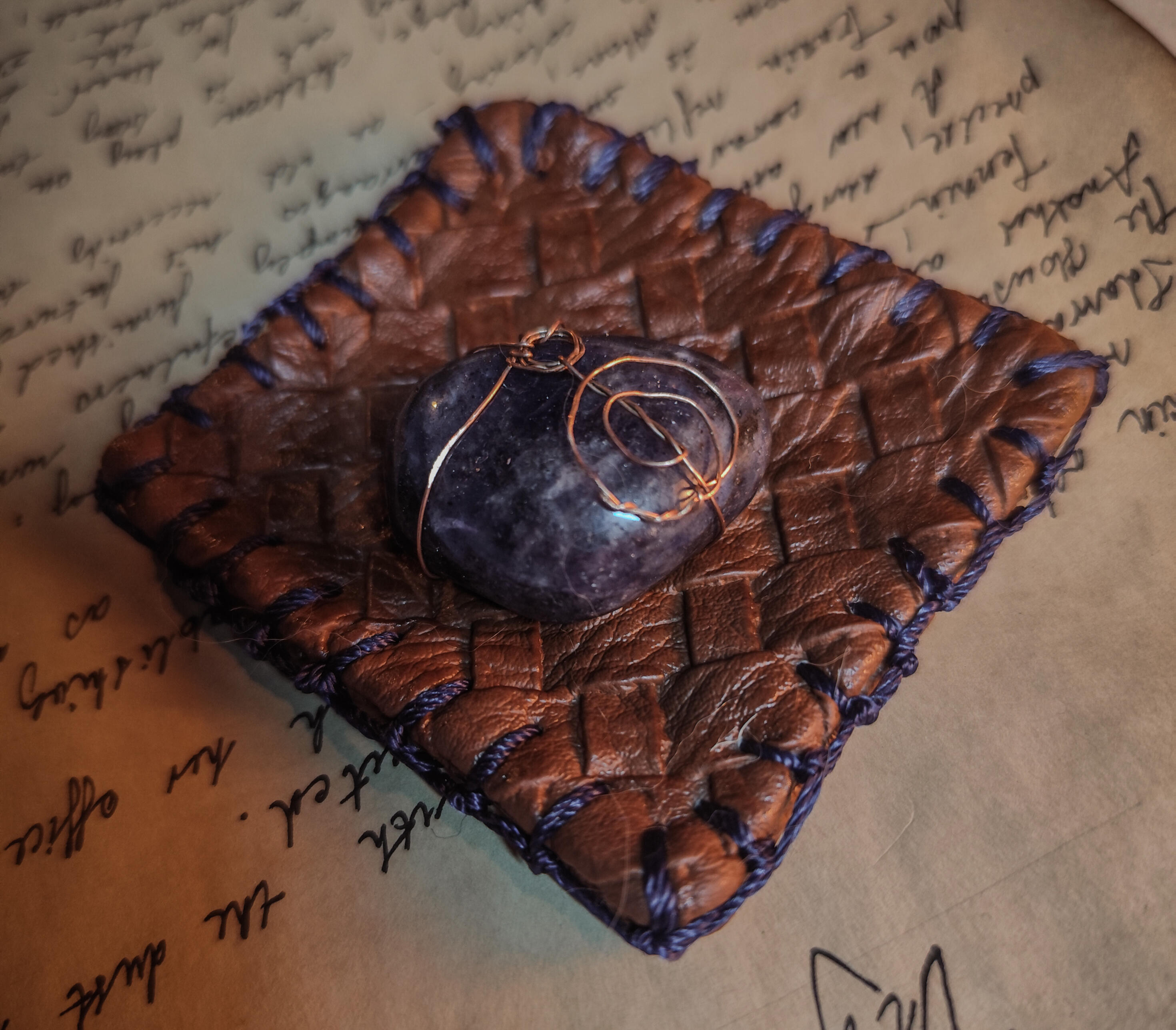
Iolite — wayfinding.
I've always been fascinated by gemstones, and over the years they've quietly become part of my writing process.Many of my characters have a stone that represents them.Iolite is often associated with inner journeys and finding one's way. For someone slowly learning who he is beyond what he was shaped to be, it felt like a fitting choice for Tenzin.I wrapped it in copper myself and stitched this little leather mat for it by hand. It sits beside the manuscript whenever I write.At this point, I don't really think of it as an iolite anymore.
I think of it as Tenzin's stone.
READ Vigil, unassigned
“I’ll hold out until you return,” he said, almost a whisper.Tenzin stilled.Only after a moment did the smallest motion betray him — a quiet, almost involuntary twitch of his thumb along the side of Aren’s hand, the movement so slight it seemed less a decision than a reflex his body had already arrived at before the rest of him had caught up.
NOTES FROM THE AUTHOR
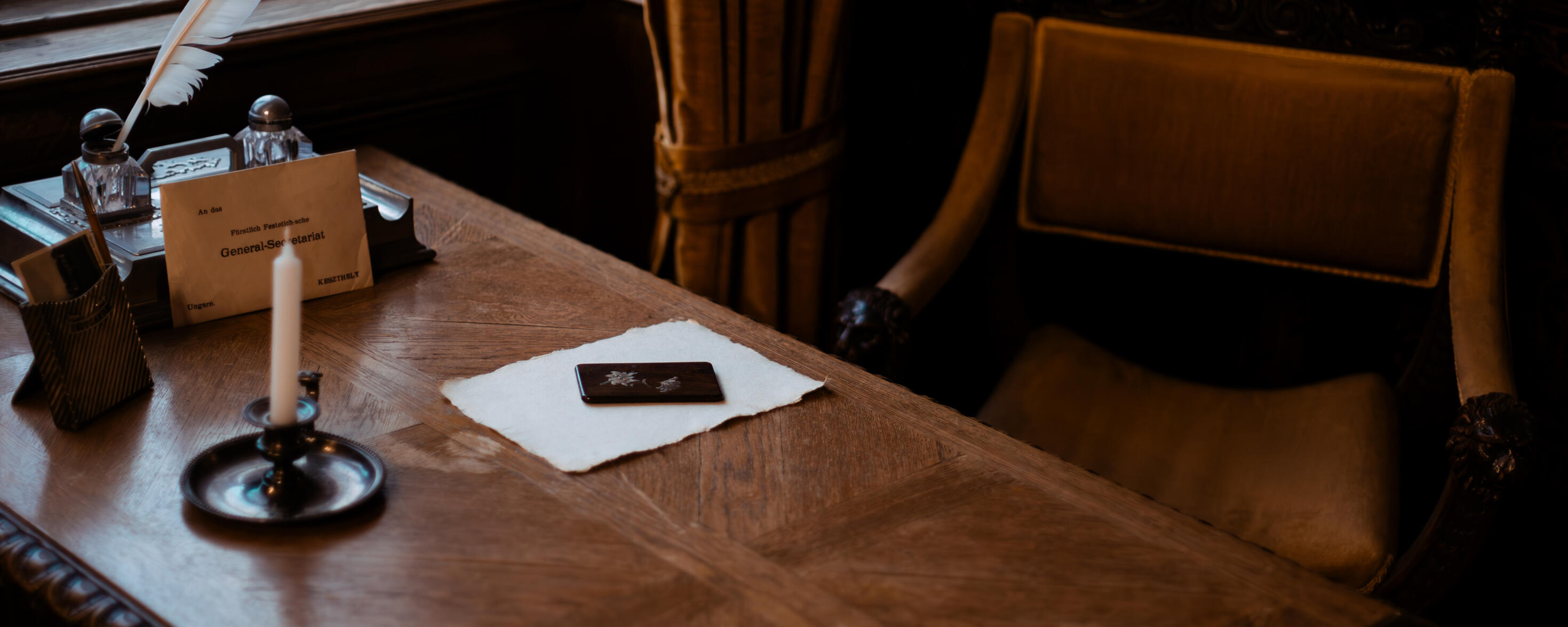
What I Mean When I Call Vigil Queer Fantasy
I’ve been sitting over the wreckage of my supposedly finished manuscript trying to work out what, exactly, I’ve done.Not what I’ve done in the practical sense. That part is fairly obvious. I’ve taken a novel I declared finished a month ago, pulled most of its structure apart, and given myself an alarming amount of work.I mean: what has Vigil actually become?
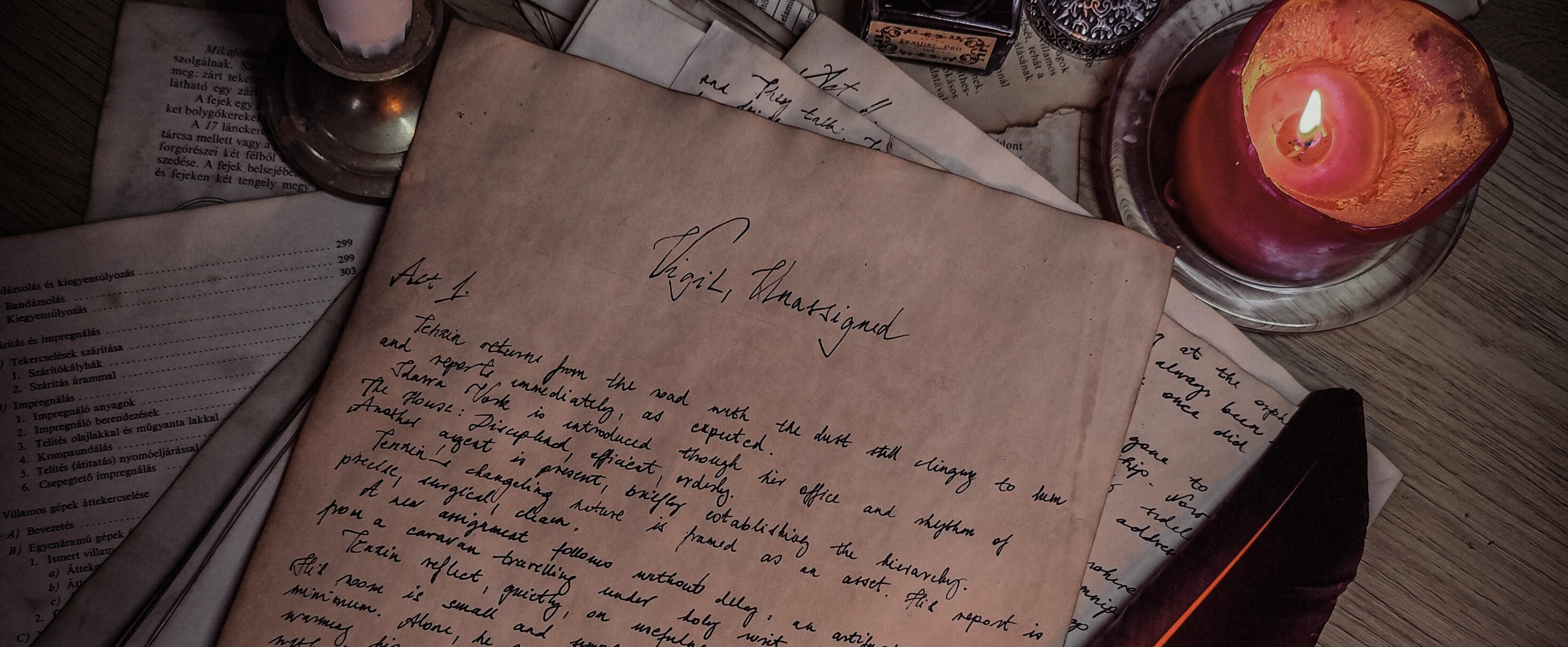
The stories we need to tell
Two years ago, my mother was diagnosed with lung cancer. Aggressive. Fast.
I became her caretaker throughout the illness, and little by little, my world narrowed around hospital corridors, medications, exhaustion, and the strange suspended state that comes with watching someone slowly disappear while still being physically present beside you.
GALLERY
Photography, illustration, and fragments of worlds both found and made.


